
Units of Measure
Because of the 96 % azeotropic property, a special unit of measurement is needed. Thus 100 litres of 96% alcohol would contain only 96 litres of “active ingredient” or 96 litres of absolute alcohol. Hence the unit “litres absolute alcohol” or “laa” is in universal use in the industry. The larger volume unit, “kilolitres absolute alcohol” or “klaa” is self explanatory. Often the “aa” is omitted, but is understood. Care has to be exercised, as the logistics industry refer to litres meaning “bulk litres”, i.e., an actual volume measurement.
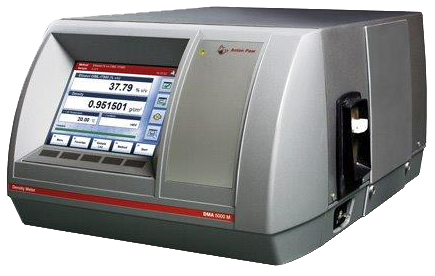
Undenatured or pure alcohol is subject to excise duty, but this duty is applicable only to the alcohol content. Determination of the alcohol strength is thus critical. This is done by measuring the density or specific gravity by means of a densitometer (e.g., Paarman) or a hydrometer and reading off the alcohol percentage strength by volume (abv) from the instrument or from tables, respectively. The percentage strength multiplied by the volume (bulk litres) will provide the laa.
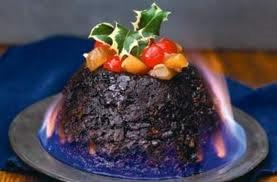
The percentage strength measurement has superseded (since 1980) the “degrees proof” or "proof" measurement of strength. In earlier years the liquor industry was vulnerable to fraudulent watering down of spirit, particularly if destined for outlying areas. High strength alcohol is flammable. A test whether alcohol was watered down was to set fire to a small quantity of gunpowder that had been damped with the spirit. If it burned then that was “proof” that this was good (strength) alcohol. The strength at which the damped gunpowder will just burn is 57.15 % and in the UK this was taken as 100 degrees proof. It follows that 100 % ethanol would be referred to as 175 degrees proof or 75 degrees overproof. In the US the "proof" scale was set at double the abv.